 VapeWholesaleHub
Mountain Dew Ice Child Resistant Closure Considerations — Wholesale Clubs
Most first time importers of mountain dew ice ask the same five questions. This page answers them in the order they usually arrive, with the numbers we quote internally rather than round marketing claims.
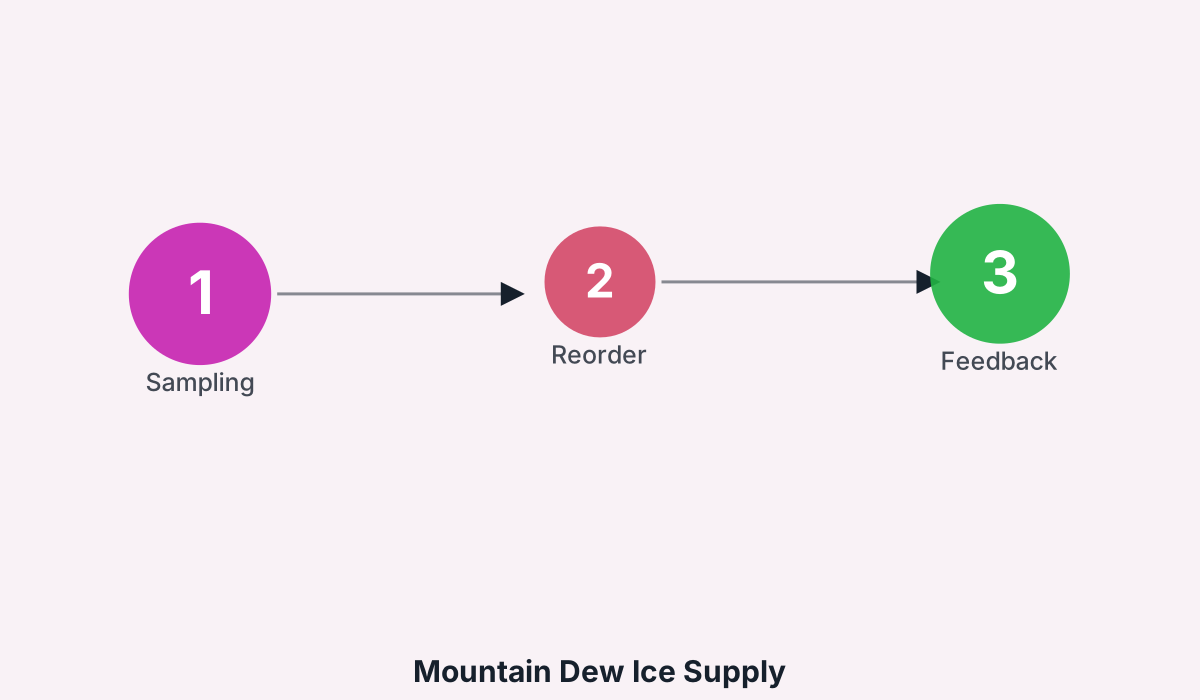
Quality Control in Practice
The defect rate that matters is the one your customer experiences, not the one the factory reports. Bridge that gap by inspecting the way a customer would open the box, not the way a line worker packs it.
Keep a photo record of every mountain dew ice approval sample. Written descriptions age badly; a dated photograph next to a delivered unit settles most arguments in seconds.
- Confirm the current customs classification with your own broker.
- Check carton dimensions against your freight quote before confirming.
- Start with a mixed carton and let your own sell-through decide.
- Ask how the factory measures puff count, then compare like with like.
- Write the complaint threshold into the order terms.
What Mountain Dew Ice Really Costs Landed
Compare mountain dew ice quotes on the same incoterm. A price that looks better because it excludes a cost you assumed was included is not a saving at all.
Indicative reference points for planning purposes: entry tier from USD 2.38 per unit at 2000 units, mid tier at USD 1.29, and volume tier at USD 1.26 for full container quantities. These figures move with specification, packaging and freight, so treat them as a shape rather than a quote.
The Specification That Matters
Ask any factory for the same mountain dew ice sample twice, three months apart. If the second sample drifts, the production line is running without statistical control and your reviews will drift with it. Consistency over time is a more useful signal than a single good sample.
Pay attention to how a mountain dew ice supplier responds when you ask for a tolerance they do not want to commit to. The hesitation is usually more informative than the eventual answer.
| Product category | Open system |
|---|---|
| Resistance band | 0.6 - 0.8 ohm |
| Capacity tolerance | +/- 3% |
| Puff count method | Machine cycle 3s on / 27s off |
| Master carton | 200 units |
| Carton weight | 5.7 kg |
| Shelf life | 24 months |
| Storage | 15-25 C, dry, away from direct light |
Trends Worth Watching
The most durable mountain dew ice lines over the last few years have been unglamorous and consistent. Novelty sells once; reliability sells every month.
One visible change in mountain dew ice is the move towards clearer labelling and traceability. Retailers who adopted batch coding early are finding it much easier to work with larger distributors now.
Freight, Customs and Timing
Air freight makes sense for a first mountain dew ice order when you need to test demand quickly, but almost every steady programme moves to sea freight once volumes stabilise. Planning that switch early avoids a painful margin squeeze later.
Air freight makes sense for a first mountain dew ice order when you need to test demand quickly, but almost every steady programme moves to sea freight once volumes stabilise. Planning that switch early avoids a painful margin squeeze later.
Positioning Mountain Dew Ice on Your Shelf
Mountain Dew Ice sits at an interesting point in the assortment. It is familiar enough to be an impulse purchase and specific enough to build a repeat pattern around. Treating it as either pure commodity or pure specialty both lead to poor results.
A tight mountain dew ice range with deep availability usually outsells a wide range with thin stock. Customers who find their line in stock come back; customers who are told to wait do not.
Practical Checklist
- Confirm the current customs classification with your own broker.
- Model landed cost, not ex-works price, when comparing quotes.
- Ask how the factory measures puff count, then compare like with like.
- Check carton dimensions against your freight quote before confirming.
- Agree the tolerance band in writing before approving artwork.
- Start with a mixed carton and let your own sell-through decide.
Frequently Asked Questions
What does a sample pack usually include?
A typical mountain dew ice sample pack covers the strengths or variants you are most likely to list, packed so you can evaluate them side by side. Tell us which lines you are considering and we will match the pack to that rather than sending a generic selection.
Can you match an existing product I already sell?
Often yes, provided we can measure it properly. Send a physical sample and we will report back on what can be matched, what will differ slightly, and why. An honest gap is more useful than a vague promise.
How long does a mountain dew ice order take to arrive?
Production typically takes ten to eighteen working days after artwork approval, and transit depends on the method you choose. Air express is fastest, sea freight is cheapest at volume. We confirm both at quotation so there is no surprise later.
Can I visit the production facility?
Yes, and we encourage it for larger programmes. Visits are most useful when you already have a draft specification, because you can then check the specific processes behind the numbers you care about.
What is the usual minimum order for mountain dew ice?
For a standard production run the minimum is normally one master carton per flavour, though mixed cartons can be arranged for a first order. If you are testing the line, ask about a sample pack first and treat the freight as part of your research budget.
Next Step
The best mountain dew ice programmes we see are run by buyers who write things down. Specifications, batch records, complaint thresholds - the paperwork is the advantage.
Related Reading
- Merchandising Mountain Dew Ice Inside a Physical Store — Specialist Vape Shops
- Mountain Dew Ice Growing From Pallet to Container — Warehouse Teams
- Mountain Dew Ice Product Photography for Listings — Cross-Border Trade
- Mountain Dew Ice vs Standard Alternatives: What Changes for Your Shelf — EU Markets
- Mountain Dew Ice Trade Show Buying Tactics — Wholesale Clubs
- Mountain Dew Ice Batch Recall Traceability in Practice — Premium Shelf Programmes