 VapeWholesaleHub
Building a Mountain Dew Ice Catalogue Your Sales Team Can Use — Entry-Level Price Points
There is a version of mountain dew ice that sells through in six weeks and a version that sits in a back room for a year. The difference is rarely obvious from a product photo. Below is the checklist our team uses when a distributor asks us to quote mountain dew ice for the first time.
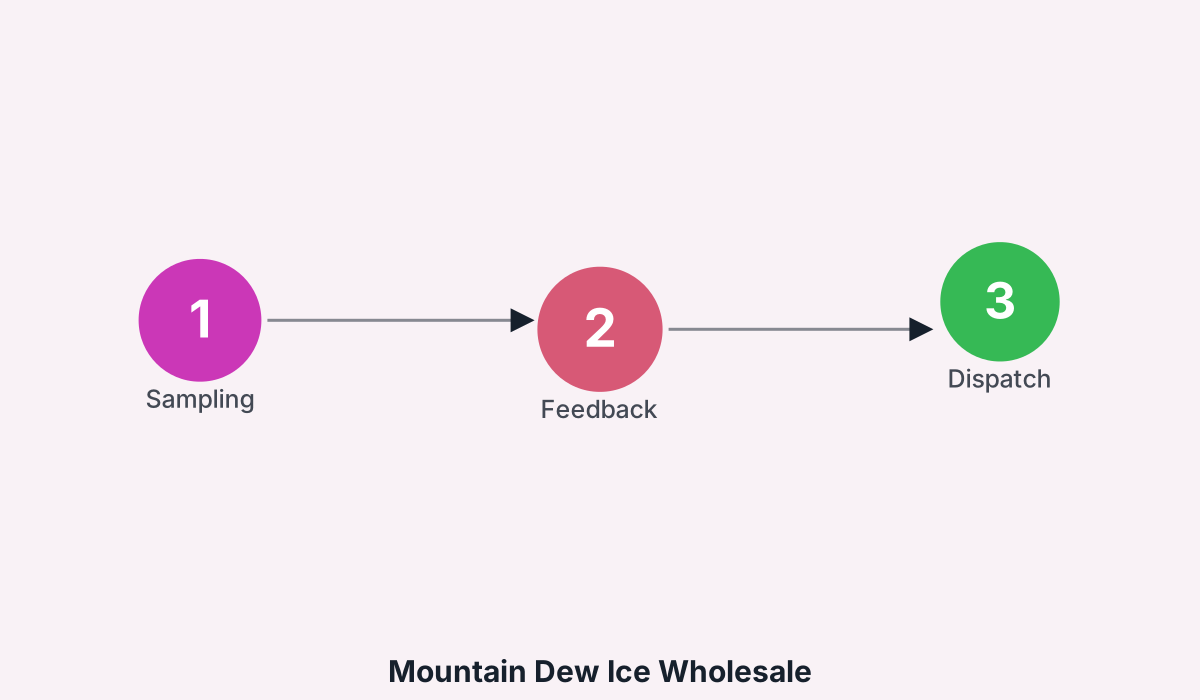
Market Signals
One shift worth planning for: shorter mountain dew ice reorder cycles with smaller average drops. It favours suppliers with flexible production slots over those who only want large annual commitments.
One visible change in mountain dew ice is the move towards clearer labelling and traceability. Retailers who adopted batch coding early are finding it much easier to work with larger distributors now.
Inspection Before Dispatch
The defect rate that matters is the one your customer experiences, not the one the factory reports. Bridge that gap by inspecting the way a customer would open the box, not the way a line worker packs it.
- Check carton dimensions against your freight quote before confirming.
- Keep sealed retained samples from every production batch.
- Rotate stock by batch code rather than by delivery date.
- Ask how the factory measures puff count, then compare like with like.
- Confirm the current customs classification with your own broker.
Reading a Mountain Dew Ice Spec Sheet
Where possible, tie part of the mountain dew ice payment to inspection against the written spec. It focuses attention on the numbers rather than on the relationship.
A written mountain dew ice specification should be short enough to read in a minute and precise enough to argue about. If a factory cannot confirm a number in writing, assume the number is whatever is cheapest that week.
| Product category | Closed pod |
|---|---|
| Resistance band | 1.2 - 1.4 ohm |
| Capacity tolerance | +/- 3% |
| Puff count method | Machine cycle 3s on / 27s off |
| Master carton | 120 units |
| Carton weight | 11.3 kg |
| Shelf life | 24 months |
| Storage | 15-25 C, dry, away from direct light |
Pricing and Margin
The cheapest mountain dew ice quote is rarely the cheapest outcome. Add freight, defect handling, delay risk and the staff time spent chasing, then compare again. The ranking often changes.
When you model mountain dew ice pricing, build in a realistic shrink figure. Even a well run line loses a small percentage to damage, expiry and sampling. Pretending that number is zero is how a healthy looking margin turns negative.
Indicative reference points for planning purposes: entry tier from USD 0.91 per unit at 2000 units, mid tier at USD 1.00, and volume tier at USD 0.99 for full container quantities. These figures move with specification, packaging and freight, so treat them as a shape rather than a quote.
Merchandising and Listing Tips
A mountain dew ice display that answers strength and flavour without staff involvement outsells a prettier one that does not. Most customers will not ask, so the fixture has to do the work.
Practical Checklist
- Ask how the factory measures puff count, then compare like with like.
- Start with a mixed carton and let your own sell-through decide.
- Rotate stock by batch code rather than by delivery date.
- Model landed cost, not ex-works price, when comparing quotes.
- Keep sealed retained samples from every production batch.
- Confirm the current customs classification with your own broker.
Frequently Asked Questions
Can I mix strengths in one order?
In most cases yes, as long as each strength meets the minimum run length. Mixed strength cartons are popular with retailers building their first display because they show the full ladder without over committing.
How should mountain dew ice be stored?
Cool, dry and out of direct sunlight. Heat and light are the two things that shorten shelf life fastest. Rotate stock by batch code rather than by arrival date, and keep cartons off concrete floors in humid warehouses.
What information do you need to quote?
Target specification, approximate quantity, destination and any packaging requirement. With those four we can usually come back with a costed option the same working day rather than a request for more information.
How do you handle a short shipment?
Cartons are counted and weighed before dispatch and the figures are shared with you. If something is short on arrival, the packing record and the carrier documentation are both available, which keeps the claim straightforward.
What if a batch does not match the sample?
Keep the retained samples from the approval stage. If a delivered batch measurably differs, we compare against the retained set and resolve it against the production record. This is why we insist on sealed retained units from every run.
Next Step
Nobody wins when a first order is too large to learn from. Start with a mixed carton, check how it moves in your own market, then scale the lines that earned the shelf space.
Related Reading
- Mountain Dew Ice Tooling and Moulding Cost Structures — Established Chains
- Private Label Mountain Dew Ice: Steps From Idea to Carton — a Printable Checklist
- Mountain Dew Ice Transport Vibration and Pack Protection — Updated for 2026
- Mountain Dew Ice Humidity Control in Coastal Warehouses — Retail Chains
- Mountain Dew Ice Sampling Programme: How to Evaluate Before You Commit — High Volume Buyers
- Mountain Dew Ice Payment Terms and Risk Management — Low Minimum Quantities